Self-Care Checklist Template: Build Your Wellness Routine
Well-being doesn't happen by accident. It requires intention, a bit of structure, and reminders that your own needs matter just as much as your deadlines, your clients, or your creative projects. A self-care checklist template bridges the gap between wanting to prioritise yourself and actually doing it. It turns vague intentions into a practical, repeatable system you can integrate into your weekly rhythm. Whether you run a business, design for a living, or juggle multiple freelance roles, having a reliable framework for your own wellness ensures you show up consistently for the work and the people that depend on you.
What Makes a Self-Care Checklist More Than a List
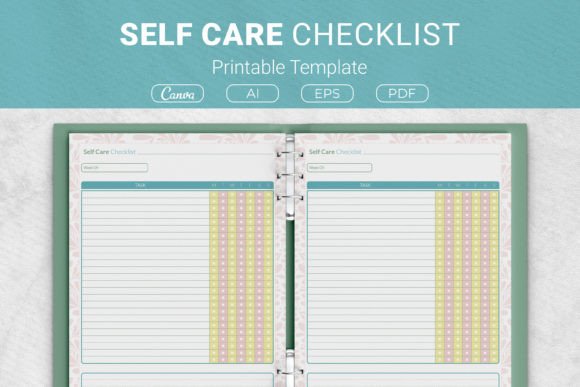
A checklist sounds simple, and it is. That is precisely its strength. You are not reinventing your entire routine each week. Instead, you follow a structure that already works, ticking off actions that support your mental, physical, and emotional health. The template included in this package gives you a flexible foundation: you can use the provided AI Illustrator files, EPS, PDFs, or the linked Canva templates to customise your checklist exactly the way you want. Because well-being looks different for every person, adaptability matters.
The real value lies in consistency. When you document tasks like morning stretch, 15-minute walk, one creative break, or log off by 7 p.m., you create accountability. Over several weeks, you notice patterns: which habits improve your mood, which ones you skip when stressed, and which new activities you want to explore. A self-care checklist template is not a rigid prescription. It is a starting point you evolve as you learn what actually serves you.
Creative Possibilities for Your Checklist
This template is designed to be more than a static document. Because it comes in multiple formats and sizes, you can adapt it for different contexts and platforms. Here are several ways to approach it, depending on your goals and audience.
1. Build a Weekly Wellness Tracker for Yourself
Print the US Letter or A4 version, place it inside a binder, and fill it out each Sunday evening. List five to seven self-care actions you want to complete in the coming week. These could include physical tasks like drinking enough water or going for a short run, mental resets such as journaling for ten minutes, and social connections like calling a friend. Each evening, check off what you accomplished. The visual progress reinforces positive habits and highlights areas where you need more support.
If you prefer digital tracking, use the Canva template link to edit your checklist on your tablet or phone. You can duplicate the page for each week, archive previous weeks, and review your consistency over a full month. This approach is especially useful if you already manage your schedule digitally and want everything in one place.
2. Design a Product for Your Shop or Portfolio
Creators, designers, and small business owners can repurpose the template as a product listing. The package includes editable AI and EPS files, which means you can rebrand the checklist with your own colours, typography, and logo. Format it as a KDP interior for Amazon Kindle Direct Publishing, or as a digital download on Etsy. The available sizes (US Letter, A4, 7.5 x 9.25 in, and 6 x 9 in) give you options for both print-on-demand and printable PDF products.
Consider building a small collection: a self-care checklist paired with a weekly planner page or a habit tracker. Many buyers appreciate a bundle that covers multiple aspects of organisation and well-being. By offering a thoughtful, well-designed template, you help your customers build their own wellness practices while generating income from your creative work.
3. Adapt It for a Specific Audience or Niche
A generic self-care checklist works, but a tailored one resonates more deeply. Think about who you want to serve:
- Freelancers and entrepreneurs often struggle with separating work from rest. Design a checklist that includes boundaries like “turn off notifications after 6 p.m.”, “take a lunch break away from the desk”, and “review the week’s wins on Friday.”
- Students and educators need manageable actions that fit around study sessions and grading. Include tasks such as “stretch for five minutes between classes”, “drink one full water bottle during lectures”, and “wind down with a non-screen activity.”
- Hobbyists and makers can add creative self-care prompts like “spend 30 minutes on a personal project”, “try a new technique without pressure”, or “share your work with a supportive group.”
When you adjust the template to reflect a specific lifestyle, it feels more relevant and easier to follow. The person using it does not need to translate generic advice into their daily reality; the checklist already speaks their language.
Practical Ways to Keep Your Results Clear and Effective
A checklist works best when it is simple, legible, and actionable. Here are recommendations to ensure yours stays useful week after week.
Limit the number of items. Aim for five to eight tasks per week. If you list too many, the checklist feels overwhelming and leads to skipped days. Fewer, meaningful actions create momentum. You can always add more once the core habits feel automatic.
Group tasks by category. Use short sections on your template for physical, mental, social, and creative well-being. This structure helps you see if you are neglecting one area while over-focusing on another. For example, you might realise you exercise regularly but avoid social connection, so you intentionally add a coffee date or a group walk.
Review and rotate activities. A self-care checklist template that never changes becomes stale. Every month, replace two or three tasks with new activities. This introduces variety and prevents boredom. You might swap “read for 20 minutes” for “listen to a podcast while cooking”, or replace “meditate for five minutes” with “breathe deeply before each meal.” The format stays the same, but the content evolves with your needs.
Keep the design clean and accessible. Since the package includes AI and EPS files, you can adjust fonts, colours, and spacing. Choose a layout that leaves enough room for handwriting if you print it, or for digital tapping if you use a tablet. A cluttered checklist discourages use. Minimalism supports consistency.
How Different Users Can Adapt the Same Template
A single self-care checklist template can serve multiple purposes depending on who uses it and in what context. Here are a few realistic examples.
For Personal Use at Home
Print the A4 or 7.5 x 9.25-inch version and keep it in a binder you review each morning. Write down your self-care priorities for the week, then place the binder somewhere visible, like your desk or kitchen counter. The physical act of ticking off a task with a pen can be more satisfying than a digital click. At the end of the week, flip back to review what you accomplished and what you might adjust next week.
For a Digital Planner or Tablet
If you use apps like GoodNotes, Notability, or a PDF annotator, import the PDF or Canva template and fill it in digitally. You can duplicate the page for each week and keep a running archive. This method works well if you already manage your calendar and notes on a device. You can also add stickers, highlights, or handwritten notes without wasting paper.
For a Paid Product or Freebie
Marketers, bloggers, and educators can offer the self-care checklist as a lead magnet or a bonus inside a larger course or guide. Because the template comes with ready-to-print PDFs and editable source files, you can customise it with your branding and distribute it to your audience. It provides immediate value and positions you as someone who cares about practical well-being solutions. Pair it with a short email series on building sustainable routines to deepen engagement.
Reinforcing the Habit Over Time
Using a self-care checklist template is not about perfection. Some weeks you will complete every task, and other weeks life will interrupt your plans. The important part is returning to the structure when you are ready. The template becomes a familiar anchor you can rely on without needing to plan from scratch each time.
To maintain momentum, set a recurring reminder on your phone or calendar: every Sunday evening, fill out the next week’s checklist. Keep your completed checklists in a binder or a digital folder. After a month, browse through them and notice which activities appeared most often and which ones you consistently skipped. That feedback helps you refine your approach and discover what genuinely supports your well-being.
The combination of a clear format, editable source files, and size options makes this template suitable for diverse applications. Whether you use it for yourself or adapt it for an audience, the core purpose remains constant: to help you stay committed to small, meaningful actions that sustain your energy, creativity, and health over the long term.
Final Thoughts on Making Self-Care Stick
A self-care checklist template is a simple tool, but it carries significant potential when used consistently. It takes the guesswork out of weekly planning and gives you a reliable framework you can trust. By choosing a format that fits your workflow, whether printed, digital, or rebranded for a product, you ensure that caring for yourself becomes a regular part of your routine rather than an afterthought.
Start with a manageable list, stay curious about what works, and allow the template to evolve with you. The goal is not to complete every task perfectly. It is to build a practice that supports your well-being week after week, so you can keep showing up for the work and the life that matter most.