Kindergarten Tracing Worksheets for Early Writing Practice
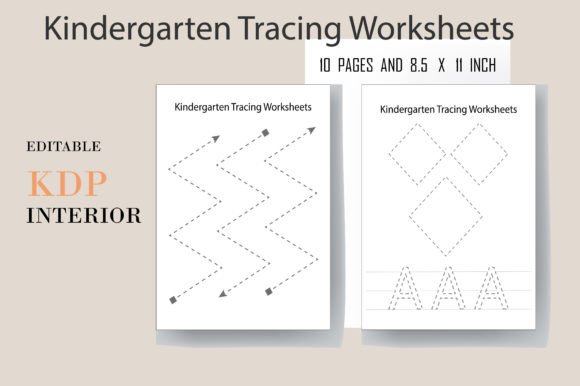
If you have ever spent time with a group of young learners, you know that the first few minutes of a lesson can set the tone for everything that follows. A warm-up that is both engaging and purposeful can make the difference between a focused session and a scattered one. That is exactly where a well-designed set of tracing sheets comes in. The Kindergarten Tracing Worksheets package offers ten printable pages that fit neatly into that opening window of your day, giving children a structured way to warm up their hands and minds before more complex tasks begin.
These worksheets are not just busy work. They are a deliberate tool for building fine motor control, letter recognition, and confidence with a pencil. Whether you are a classroom teacher, a homeschooling parent, or a content creator looking for reliable educational assets, this set delivers practical value without extra frills.
What Makes These Worksheets Stand Out
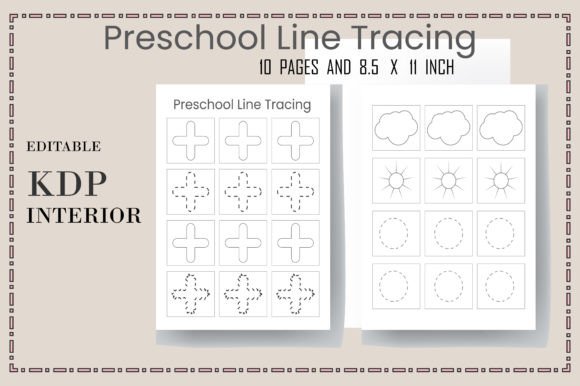
The first thing you notice about the Kindergarten Tracing Worksheets is their clean, uncluttered layout. Each page focuses on a specific tracing activity, with generous spacing and clear lines that guide a young hand. The design personality here is straightforward and functional. There is no distracting clipart, no overly decorative borders, and no visual noise that might pull attention away from the task at hand. That matters because young children benefit from predictability and simplicity when they are learning a new skill.
The visual style is best described as modern typography applied to early education. The letterforms are rounded, friendly, and easy to replicate. They sit squarely in the handwritten font category, but they are not fluffy or whimsical. Instead, they strike a balance between approachable and precise. The line weights are consistent, and the stroke direction is clear enough that a child can see exactly where to start and where to go. For an educator or a publisher, that kind of clarity reduces the number of times you have to stop and explain.
Another detail worth noting is the absence of bleed. The no bleed specification means that when you print these pages, the content stays well within the margins. Nothing gets cut off. That might sound minor, but if you have ever printed a poorly formatted PDF at 8.5″ x 11″ and watched the edges disappear, you know how frustrating it can be. These sheets are ready to go straight from the file to the printer.
Where These Worksheets Work Best
The Kindergarten Tracing Worksheets are versatile enough to appear in several different contexts. Here is a look at the settings where they deliver the most impact.
Classroom Warm-Ups and Morning Work
In a traditional classroom, the first few minutes after students arrive can be chaotic. Having a stack of tracing sheets on each desk gives children something productive to do immediately. They can begin tracing without instruction because the activity is self-explanatory. Teachers have told me that this simple routine cuts transition time by nearly half. You can use the worksheets as a daily warm-up, a quick assessment of fine motor progress, or a calm-down activity after recess.
Homeschooling and Small Group Settings
For parents who teach at home, flexibility is everything. The Kindergarten Tracing Worksheets come in an editable AI source format, which means you can adjust the content if needed. Maybe you want to add your child's name at the top, or swap out a letter for one they are struggling with. Having that editable layer is a huge advantage over a static PDF. You are not locked into a fixed layout. You can tailor each sheet to match your child's current skill level.
Educational Publishing and Content Creation
If you are a blogger, a publisher, or a small business owner who creates learning materials for other educators, this set can serve as a base for your own products. The editable format lets you rebrand the worksheets, change the instructions, or combine them into a larger workbook. The clean design means they will look professional whether you offer them as a freebie or as part of a paid bundle. And because the file is provided in AI format, you can open it in Adobe Illustrator or similar software and make changes without losing quality.
How the Format Supports Your Teaching Goals
Let's talk about the specifications in a more practical way. The Kindergarten Tracing Worksheets come in a standard 8.5″ x 11″ size, which means they fit into any binder, folder, or tray. The file format is AI and PDF, so you have both an editable source file and a ready-to-print version. That dual format is helpful if you want to make tweaks but also need something you can send to a printer immediately.
The editable nature of the AI file opens up several possibilities. You can adjust the tracing lines to be thicker or thinner depending on the age of the child. You can add dots or arrows to show stroke direction. You can even change the font if you prefer a different style, though the existing handwritten font has been chosen specifically because it mirrors the way children are taught to form letters in most early curricula.
For commercial use, the included licensing allows you to incorporate these worksheets into products you sell. That is a key consideration for any commercial font or design asset. When you buy a resource that is already cleared for commercial use, you save yourself the headache of tracking down individual font licenses later. This set is built for creators who want to move fast and stay legal.
Readability and Skill Development
One thing that sets these worksheets apart from many free alternatives is the attention to readability. The letterforms are not stylized to the point of being confusing. A lowercase a looks like the one children learn to write, not like a typeface variation. The same goes for g, t, and q. That might seem obvious, but many tracing resources use fonts that were never designed for handwriting practice. The result is that children end up copying letters that do not match what their teacher demonstrates.
The Kindergarten Tracing Worksheets avoid that disconnect. The font used here is a script font in the sense that it mimics natural handwriting, but it is simplified enough for early learners. There is no exaggerated slant, no unnecessary loops, and no fancy flourishes. Every stroke is functional. Every letter is recognizable at a glance.
For the adult using the worksheet, that means less time explaining and more time observing. You can watch a child trace the letters and immediately see where they struggle. Maybe they have trouble with curved lines, or they rush through the straight ones. The clarity of the design makes those patterns visible. Over time, you can track improvement and adjust the difficulty as needed.
Practical Tips for Getting the Most Out of the Set
Here are a few ways to integrate these worksheets into your routine without overthinking it.
- Use them as a morning warm-up. Print a stack and keep them in a tray near the door. Children grab one as they enter and start tracing immediately. It sets a calm, focused tone for the day.
- Combine them with other fine motor activities. Tracing works well alongside playdough, bead threading, or scissors practice. The worksheets target the same muscles in a different way.
- Laminate a few pages for reuse. If you laminate the sheets, children can use dry-erase markers and wipe them clean. That extends the life of the resource and reduces printing costs.
- Edit the AI file to create a progression. Start with simple lines and curves, then move to letters, then to short words. The editable format lets you build a whole curriculum from a single set.
- Offer them as a digital download on your site. If you run a blog or a small shop, these worksheets make a useful freebie for growing your email list. Parents are always looking for quality tracing practice.
Why This Resource Matters for Creators and Educators
From a brand identity perspective, the way you present learning materials says something about your values. If you are a publisher or a content creator, using a clean, well-designed worksheet set like this one signals that you care about the user experience. It tells teachers and parents that you understand what works in a real classroom. That kind of trust is hard to build, but it starts with the quality of the assets you put out.
For designers working on educational products, the Kindergarten Tracing Worksheets serve as a solid foundation. You can use them as-is or modify them to fit a specific theme or curriculum. The sans serif font style used for any headers or labels on the sheets is clean and modern, which makes the overall package feel current without being trendy. That is a hard balance to strike, and this set strikes it well.
If you are comparing this resource to other options on the market, the main advantages are the editable format, the professional layout, and the absence of bleed issues. Many free tracing sheets are thrown together in a word processor with a haphazard font and no thought to spacing. The Kindergarten Tracing Worksheets are clearly designed by someone who understands both early childhood development and print production. That combination is rare, and it makes the resource worth having in your toolbox.
A Final Word on Practical Use
You do not need to be a trained educator to use these worksheets effectively. If you are a parent helping your child at home, just sit beside them and let them trace at their own pace. Point out where each line starts and encourage them to go slowly. If you are a teacher, use the sheets as a quick informal assessment. Hand them out and see which students can follow the path accurately and which ones need more support.
The Kindergarten Tracing Worksheets are not flashy. They do not promise overnight results or magical transformation. What they offer is something more reliable: a straightforward, well-constructed tool that makes the job of teaching and learning a little easier. In a world of overcomplicated resources, that simplicity is exactly what most of us need.