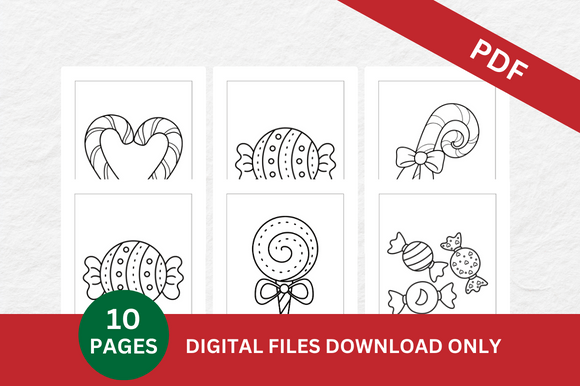
Candy Coloring Pages for Creative Projects
Coloring pages have moved far beyond simple busy work for children. For anyone creating content for print or digital platforms, a well-designed set of candy coloring pages offers a versatile foundation that can be adapted for multiple audiences and formats. Whether you are an independent publisher preparing a KDP title, a teacher building a classroom activity pack, or a designer looking for fresh visual themes, candy-themed illustrations provide a sweet spot between whimsy and structure. The concept is straightforward: a collection of line art featuring candies, sweets, confections, and treats, ready to be filled with color. But the practical applications go much deeper than that.
What Makes Candy Coloring Pages Distinctive
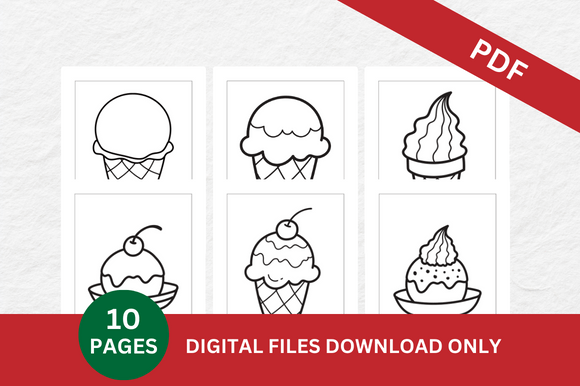
Candy imagery is inherently appealing because it combines familiar shapes with unlimited color potential. Lollipops, gumdrops, wrapped candies, chocolate bars, and peppermint swirls each have recognizable forms that are easy to render as line art. This visual clarity makes them ideal for young learners who are developing fine motor skills, but the same pages can be reimagined for older audiences by adjusting the complexity of the linework or the thematic context. A standard set, such as one with 10 arts on an 8.5″ x 11″ inch page with no bleed and a print-ready PDF, gives you a compact but usable collection that can be slotted into larger books or sold as a standalone product.
The simplicity of the subject is a strength. Because the objects are abstract enough to allow creative freedom, a single page can produce wildly different results depending on the colorist’s mood or skill level. A young child might use solid blocks of primary colors, while an adult looking for relaxation might experiment with shading and gradients. This flexibility makes candy coloring pages a smart choice for creators who want to serve a broad audience without needing to design separate assets for each demographic.
Creative Approaches and Variations
When you start working with candy coloring pages, you quickly realize that the theme opens up several creative directions. You are not limited to realism. You can approach the illustrations abstractly, using geometric patterns inside candy outlines, or you can design pages that tell a story, such as a candy shop scene or a candy land map. The 10-art format gives you enough room to offer variety while keeping the project manageable.
Pattern-Based and Zentangle Styles
One popular variation is to incorporate repetitive patterns inside candy shapes. Instead of leaving the interior blank, you add swirls, dots, stripes, or checkerboards. This turns a simple coloring page into a more engaging experience for older children and adults. Pattern-based pages also work well for mindfulness or stress relief content, where the repetition of small details helps the colorist focus. If you are targeting the adult coloring market, consider offering a subset of your candy pages with intricate internal linework. The same basic candy outline can be reused with different interior patterns, giving you more value from each illustration.
Seasonal and Themed Sets
Candy coloring pages are easy to adapt for holidays and events. Halloween candy pages with pumpkins, candy corn, and wrapped treats are obvious, but you can also create Valentine’s Day hearts and chocolates, Easter egg-shaped candies, or Christmas peppermint and gingerbread themes. By keeping the core candy shapes consistent and swapping out thematic details, you can produce multiple products from a single design system. This is efficient for KDP publishers who want to build a series of seasonal activity books without starting from scratch each time.
Educational Pairings
For educators and homeschooling parents, candy coloring pages can be paired with learning activities. A page with different types of candies can be used for counting, sorting by size, or identifying colors. You can add simple labels to the pages, turning them into vocabulary sheets for young learners. The large 8.5″ x 11″ format leaves room for text or small instructions in the margins if needed. Teachers often appreciate pages that serve a dual purpose: a creative outlet and a learning tool.
Practical Applications for Different Users
Not every creator uses coloring pages in the same way. Understanding how different audiences interact with your content helps you design better products and market them more effectively.
KDP Publishers and Print-on-Demand Creators
If you are publishing through Amazon KDP or another print-on-demand platform, candy coloring pages can be the core of a low-content or medium-content book. A 10-page interior is small for a paperback, but it works well as a companion to other activities. You can combine it with mazes, dot-to-dot puzzles, or word searches to create a mixed activity book. The no-bleed specification simplifies layout: you do not need to worry about trimming or margin adjustments. The PDF format is ready to upload. Test your file on a few devices to ensure the line art prints cleanly at different sizes. Many publishers find that bundling multiple small page sets into a single larger book increases perceived value.
Teachers and Homeschool Educators
For classroom use, candy coloring pages are a low-prep resource. Print them as morning work, reward activities, or center rotations. Because the theme is non-academic, children view it as a treat rather than a task. You can also differentiate instruction by offering the same candy outline to students at different skill levels, letting each child work at their own pace. The straightforward shapes make it easy for younger children to stay within lines, while older students can add details like highlights and shadows using colored pencils. If you create a digital PDF, you can project the page on a screen and color together as a class, which builds community and fine motor skills simultaneously.
Bloggers and Content Creators
If you run a parenting blog, a crafting channel, or a teaching resources site, candy coloring pages make excellent freebies or lead magnets. Offer a single page as a free download to build your email list, then sell the full 10-page set as a low-cost product. Because the topic is evergreen, it will continue to attract downloads year after year. You can also create video content around the pages: time-lapse coloring tutorials, tips for choosing colors, or ideas for framing the finished artwork. The visual appeal of bright candy colors translates well to social media thumbnails and pins.
Keeping Results Clear and Audience-Friendly
Good line art is the foundation of a usable coloring page. Thick, consistent lines are easier for children to see and stay inside. For adult pages, thinner lines allow for more detail. If you are designing for both audiences, consider offering two versions of each page: one with bold lines for kids and one with finer lines for adults. Keep the composition balanced so that the main subject is centered and large enough to color comfortably. Avoid tiny, intricate areas that frustrate younger users. A clean white background with no gray or color ensures that the printed page looks crisp even on home printers.
When preparing the PDF, check that all fonts are embedded if you use text, and that the pages are flattened correctly. If you are selling through KDP, run the file through their preview tool to confirm that the no-bleed setting displays correctly. Organize the pages in a logical sequence: start with simpler designs and progress to more detailed ones. This helps users feel a sense of accomplishment as they work through the book.
Originality and Consistency in Your Products
Coloring pages are a saturated market, but you can stand out by developing a consistent visual style. Instead of mixing different artists or vector sources, create all 10 pages with the same line weight, same level of detail, and same thematic cohesion. If your candy pages include lollipops, wrapped candies, and chocolate bars, keep the drawing style uniform. This consistency builds trust with buyers and makes your product look professional. For KDP, customers often judge a book by the preview: a cohesive interior that looks like a complete set rather than a random collection will convert better.
Originality does not mean you need to reinvent the wheel. It means making deliberate choices about the mood, complexity, and audience of your pages. A candy coloring set designed for preschoolers will emphasize large, simple shapes. One aimed at adults will incorporate fine detail and possibly abstract backgrounds. Both are valid, but they serve different markets. Knowing who you are designing for helps you make better decisions about layout, line thickness, and page count.
Practical Recommendations for Your Next Project
If you are ready to create or purchase a candy coloring page set, start with a clear brief. Decide on the target age range, the number of pages, and the format. The 10-page, 8.5″ x 11″, no-bleed, PDF specification is a reliable baseline that works for print and digital distribution. Test the pages with actual users if possible. A small focus group of children or parents can reveal whether line thickness, spacing, and difficulty level are appropriate. Use feedback to refine the set before publishing.
Consider offering the PDF in two versions: one for home printing and one optimized for tablets. Digital coloring is growing in popularity, and a PDF that loads cleanly on an iPad or Android device opens up a different market. If you are serious about KDP, bundle your candy coloring pages with companion activities to increase the page count and value. A 50-page book that includes a 10-page coloring section alongside puzzles and games often sells better than a 10-page coloring book alone.
Candy coloring pages are a small category with broad appeal. They work for children learning to color, adults seeking relaxation, teachers planning lessons, and publishers building product lines. By focusing on clean design, audience-specific adjustments, and consistent execution, you can turn a simple set of candy illustrations into a versatile asset that serves many purposes over time.