90-Day Gratitude Prompt Journal: Design Your Own Reflection Guide
A 90-day gratitude practice can shift how you see your days, but the real value often comes from how you shape the experience. The 90-Day Gratitude Prompt Journal KDP offers a flexible framework for daily reflection, and when you combine it with the Editable 90-Day Gratitude Prompt Journal Canva Interior, you gain full control over the look and flow of every page. This isn’t just a fill-in-the-blanks notebook. It’s a foundation you can adapt, personalize, and even publish under your own brand. Whether you’re a creator looking for a new product to sell on Amazon KDP, a designer who wants to offer custom journals to clients, or someone building a personal habit that sticks, this format gives you room to work with purpose.
What Makes This Journal Format Different
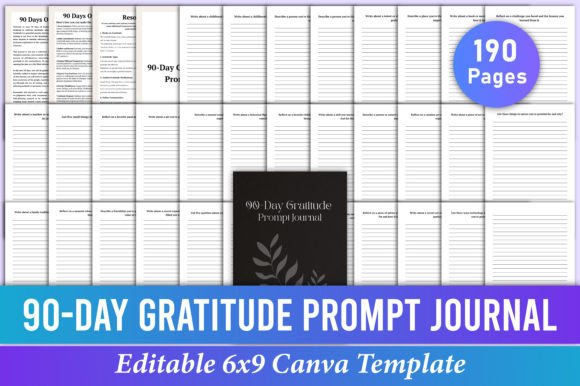
At its core, the journal includes a Belongs to page, a How to Use section, gratitude resources, 90 daily prompts spread across two pages each, and dedicated notes pages. That structure is clean and intentional. But the real advantage comes from the editable Canva link. You can change text, colors, fonts, and layout style to match any audience or aesthetic. The print-ready PDF files come in 6x9 inches with CMYK color at 300 DPI, which means the final product looks professional whether you print one copy or run a batch for a small shop.
The 90-day format works well because it gives enough time for the habit to settle without feeling overwhelming. Two pages per prompt offer space for deeper reflection without turning each entry into a chore. And the included gratitude resources help newcomers understand why they’re doing this in the first place. That combination makes the journal useful for both first-time journal users and people who have tried other methods and want something more structured.
For KDP Publishers and Self-Publishers
If you list books on Amazon, the 90-Day Gratitude Prompt Journal KDP format gives you a ready-to-publish interior that you can differentiate with your own cover and branding. Because the Canva file is editable, you can tweak the prompts to fit specific niches—gratitude for new moms, for entrepreneurs, for people navigating grief, or for students starting a semester. You can adjust the tone of the How to Use page, swap in more reflective prompts, or even change the resource section to include quotes or exercises that align with your audience’s goals.
A practical approach is to create a series: one general gratitude journal, one themed around morning routines, and one focused on relationships. Each can use the same base design but with different color palettes and prompt variations. This keeps production efficient while giving buyers a reason to come back for more.
For Designers and Creative Professionals
If you work with clients who want custom journals for retreats, workshops, or corporate wellness programs, the Editable 90-Day Gratitude Prompt Journal Canva Interior saves hours of layout work. You can present a polished prototype quickly, then adjust fonts and spacing to match the client’s brand guidelines. The CMYK color space and 300 DPI resolution mean the files are print-ready, so you can send them directly to a printer without extra conversion steps.
You might also use the format to create a limited edition journal for a special event. Change the prompts to reflect the theme of a weekend retreat, add space for group notes, and include a custom resource page that ties back to the event’s goals. The flexibility of the Canva link means you can experiment with different layouts on the same base file without starting from scratch.
For Personal Use and Habit Building
Not everyone who uses this journal intends to sell it. If you’re building your own gratitude practice, editing the journal in Canva before printing lets you tailor every prompt to what you actually want to reflect on. Maybe you want to focus on gratitude for small daily wins, or you’d rather explore gratitude in the context of challenges and growth. You can rewrite prompts, adjust the number of lines per page, or add your own categories to the resource section.
One approach is to print a single copy and treat it as a prototype. Use it for 90 days, then go back and refine the prompts based on what worked. The second version becomes something you can keep or share with friends. The process of editing and printing turns the journal into a personal project rather than a generic notebook.
How to Adapt the Journal for Different Audiences
The same base design can serve very different groups with a few intentional changes.
- For professionals and entrepreneurs: Use clean, minimal fonts and a muted color scheme. Replace general prompts with ones that tie gratitude to business milestones, client relationships, and personal growth. Add a notes section at the end of each week for professional reflections.
- For educators and group facilitators: Include prompts that encourage sharing and discussion. Add a section at the back for group reflections or workshop notes. Use brighter colors and slightly larger fonts for readability in a classroom or meeting setting.
- For hobbyists and creative individuals: Leave space for doodles, sketches, or short free writes alongside the prompts. Use a layout that balances structure with open-ended sections. Choose fonts that feel playful but remain legible.
- For wellness and self-care audiences: Integrate the gratitude resources into the prompt pages themselves. Add a short breathing exercise or a grounding question before each week’s prompts. Choose soft, calming colors and generous white space.
Each of these adaptations takes advantage of the editable Canva link without needing advanced design skills. You can keep the same 190-page count and 6x9 inch trim size while completely changing the tone and focus of the content.
Practical Tips for Keeping Your Journal Clear and Effective
A gratitude journal works best when the reader’s attention stays on the act of reflection, not on figuring out the layout. Keep these principles in mind whether you’re designing for yourself or for a wider audience.
- Consistency in prompt placement: Place the prompt in the same position on every page or spread. If the reader has to hunt for where to write, the flow breaks. The original design already does this well, so maintain that pattern if you edit the file.
- Readable font size: For printed books, 10 to 12 point is standard. If you target an older audience or want a more spacious feel, go slightly larger. Test by printing a sample page before finalizing.
- Color with purpose: CMYK color space is already set, but keep in mind that dark backgrounds with light text can strain the eyes. Stick to light or neutral backgrounds for the writing areas, and use color for accents, headers, and decorative elements.
- Leave white space: Each prompt already has two pages. Resist the urge to cram in extra elements. Empty space gives the reader room to think and write freely. It also makes the journal feel more premium.
- Test the editable link: Before distributing or printing, make sure the Canva link works and that all text layers are editable. Sometimes shared templates lose font connections or image placements. A quick review saves problems later.
Balancing Inspiration with Practical Structure
The best gratitude journals don’t rely on vague encouragement. They give the reader a reason to come back day after day, and they make the act of writing feel manageable. The 90-day format works because it’s long enough to build a habit but short enough to feel like a commitment you can keep. The prompts in this journal are designed to move from surface-level gratitude to deeper reflection over time. If you edit the prompts in Canva, keep that progression in mind. Start with questions that are easy to answer, then gradually introduce prompts that ask for more thoughtful responses.
The resource section is another place where practical structure matters. Instead of a generic list of benefits, include a short explanation of how gratitude journaling works in daily life. You can add a simple example of a completed entry, a tip for when someone misses a day, or a suggestion for reviewing entries at the end of each month. These small additions turn the journal from a collection of blank pages into a guided experience that readers trust.
Originality Without Overcomplicating
You don’t need to reinvent the format to make it your own. Small changes done well carry more weight than big shifts that confuse the reader. If you choose to customize the prompts, keep the language direct and specific. Replace “Write about something you’re grateful for” with “Think of one interaction today that made your work easier. What happened, and who was involved?” That kind of specificity helps the reader recall real moments rather than feeling pressure to produce a perfect answer.
The same principle applies to the visual design. A consistent color palette, one or two complementary fonts, and a clear hierarchy for headings, prompts, and notes areas will make the journal feel cohesive. If you’re publishing on KDP, that cohesion helps your product stand out in search results and customer reviews. If you’re designing for a client, it shows professional attention to detail that builds trust.
Bringing It All Together
The 90-Day Gratitude Prompt Journal KDP with its Editable 90-Day Gratitude Prompt Journal Canva Interior offers a practical starting point for anyone who wants to create a meaningful reflection tool. Whether your goal is to publish, to design for others, or to build a personal practice, the editable format and print-ready files remove the friction of starting from zero. You can focus on what matters most—shaping the content, tone, and visual identity to fit a specific purpose.
Take the time to walk through the Canva file before you print or publish. Adjust the colors, test the fonts, rewrite a few prompts. That investment of a few hours will give you a product that feels intentional and ready to use. For creators, designers, and anyone who values structure with flexibility, this journal format is a solid foundation that leaves room for your own ideas to grow.